Integrative Acupuncture
Targeted, personalized care for pain, injury, and recovery in Whistler’s Function Junction
Acupuncture at Mend Health Co. is an anatomy-based approach designed to restore whole-body function and optimize human performance.
Each session is guided by assessment to understand how your body is compensating and where it needs support, then uses simple, targeted interventions to address the root of your symptoms and support lasting results. Treatment incorporates an individually tailored blend of clinically proven modalities to target musculoskeletal issues while supporting overall well-being.
-
Your first appointment focuses on understanding how your body is functioning as a whole, not just where you feel the symptoms.
We’ll start with a conversation about what’s been going on, followed by an assessment to see how your muscles, joints, and nervous system are working together. This might include modern physical assessment and/or traditional tongue and pulse diagnosis. This helps identify the patterns most relevant to treat, which isn’t always where symptoms are felt.
Treatment is guided by what shows up on that assessment and may include traditional channel-based acupuncture, dry needling, motor point work, or other techniques as needed. The goal of the first visit is to begin restoring function, reduce irritation, and see how your body responds to treatment.
Rather than trying to treat everything at once, we prioritize what’s most likely to create meaningful change. This helps set a clear direction for future care and supports better, longer-lasting results. We often have you identify your top 3 concerns and build an elegant plan that your body will be able to respond to.
-
Follow-up appointments are streamlined, building off of your previous visits.
We’ll briefly check in on how things have changed since your last session, then re-evaluate what your body needs that day. Treatment is prioritized based on what shows up on reassessment and overall patterning to support meaningful, lasting change.
-
The Process:
First, we identify the patterns underlying your symptoms, and then we create a treatment plan that will include personalized treatments repeated regularly (often 2x/wk for 2 the first 2 weeks, then weekly) until you achieve 2 weeks of lasting relief. At this point, we space treatments out for maintenance, or you can book back in at the first sign of the symptom's return.
The Science:
Acupuncture helps shift your body into a state where it can heal and adapt more efficiently. The needles stimulate specific points that send signals through the nervous system to the brain. In response, the body releases natural chemicals that:
reduce pain and inflammation
improve circulation
relax tight muscles
regulate the stress response
support tissue repair and recovery
At the same time, it directly helps reset how muscles and nerves communicate, so movement becomes more coordinated and less effortful.
Moving your system out of a “fight-or-flight” state and into a “rest-and-repair” state, where healing, recovery, and better function can actually happen.
-
Most people find treatment very tolerable — and often less uncomfortable than they expect.
You may feel brief sensations such as pressure, heaviness, or a quick muscle response, especially with motor point or dry needling work. These sensations are usually short-lived and followed by a feeling of release or ease.
Treatment is always adjusted to your comfort level. The goal isn’t to push through discomfort — it’s to create effective change without overwhelming your system.
-
![Woman lying on her back receiving physical therapy or stretching from a therapist, holding her raised leg. The therapist is smiling and guiding her through a stretch.]()
Functional Assessment
A mix of muscle testing, range of motion evaluations, and movement analysis to pinpoint the specific muscles that may be restricted or weak, helping us create a treatment plan tailored to your needs.
-
![A person lying on a massage table receiving acupuncture from an acupuncturist]()
Motor Point Activation
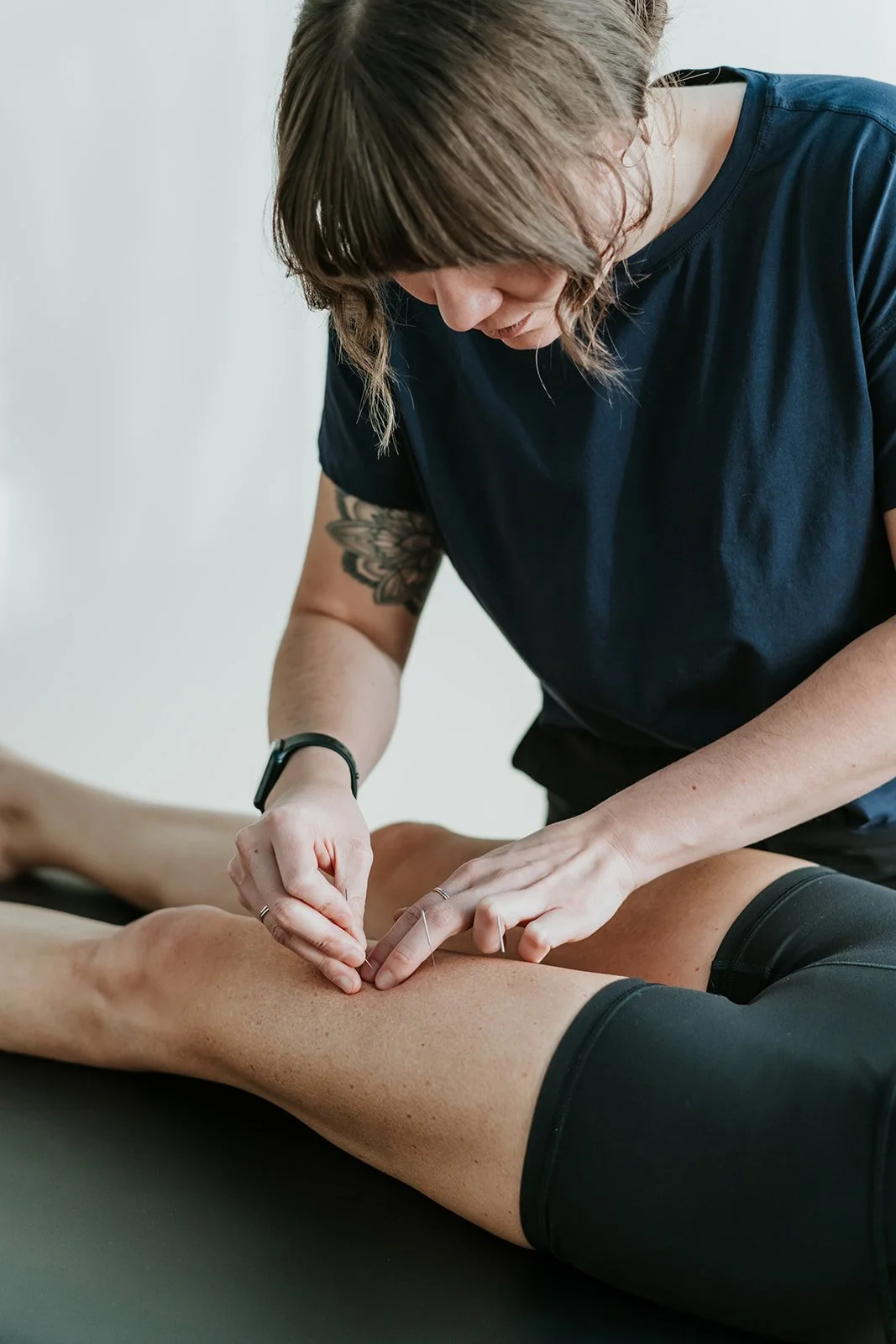
Targets specific points within muscles to reset their function, improving strength and flexibility. This technique is especially useful for pain relief and restoring mobility after injury, making it ideal for athletes and anyone dealing with muscle tension.
-
![A person receiving dry needling on their back from an acupuncturist]()
Dry Needling
Targeting “trigger points” or tight bands within muscle tissue with an acupuncture technique that will illicit a natural twitch response followed by relaxation of the muscle. Great for those stubborn spots that just won’t release with anything else.
-
![Close-up of a person's arm with electroacupuncture treatment for shoulder pain]()
Electroacupuncture
Combines acupuncture with gentle electric currents to boost the effects of treatment. This helps activate muscle tissue, increase circulation, and speed up the body’s natural healing process, making it a powerful tool for recovery.
-
![A person receiving acupuncture treatment, with thin acupuncture needles inserted into their forearm.]()
Distal Acupuncture
Stimulates nerve receptors, triggering the release of endorphins and other natural chemicals. This helps to reduce pain, improve circulation, and decrease inflammation, promoting overall healing and well-being.
-
![A woman providing physical therapy or massage to a man lying on a table]()
Manual Therapy
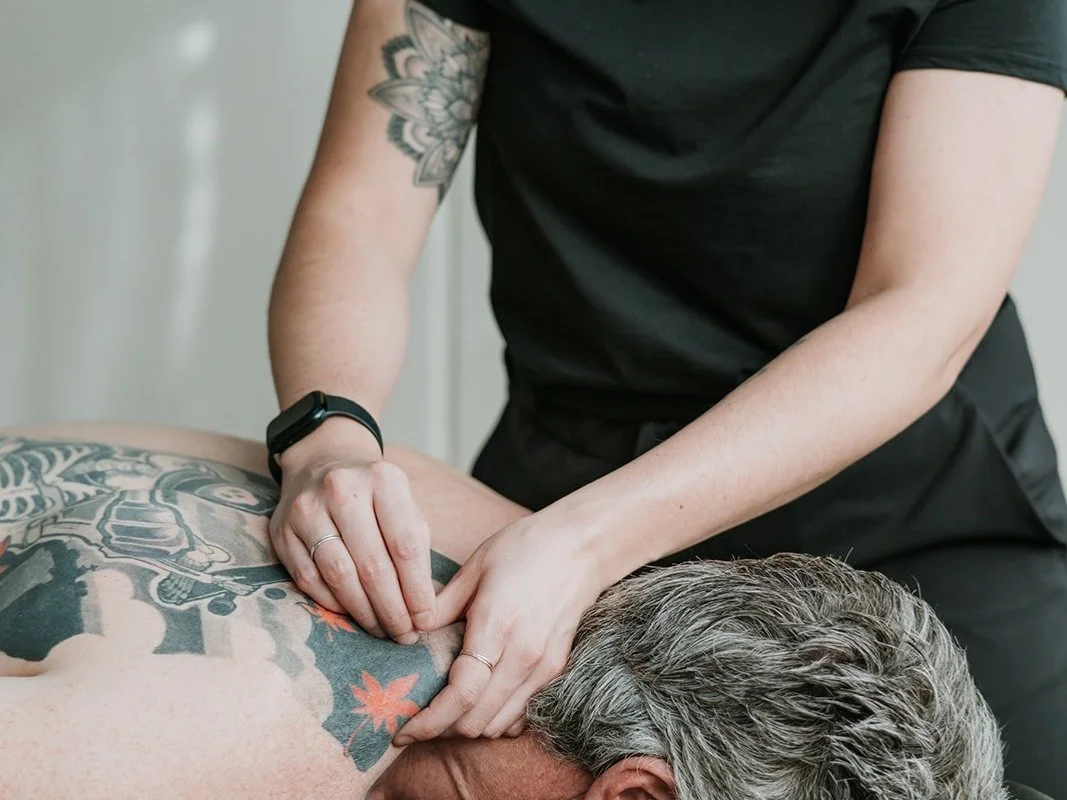
Hands-on therapies to relieve pain and improve movement. Techniques like fascial release, cupping, muscle energy techniques and active release help restore mobility, enhance recovery, and improve treatment outcomes.
-
![A woman in a black tank top receiving physical therapy from a therapist in a green shirt, holding her forearm gently.]()
Corrective Exersice
Designed to complement your treatments. Simple at home exercises help you maintain your progress and prevent injuries. With minimal equipment needed, and tailored to you, they keep you moving and improving between sessions.